Journey to Doomsday: Iron Man
Journey with me to where it all began as I embark on the ultimate rewatch.

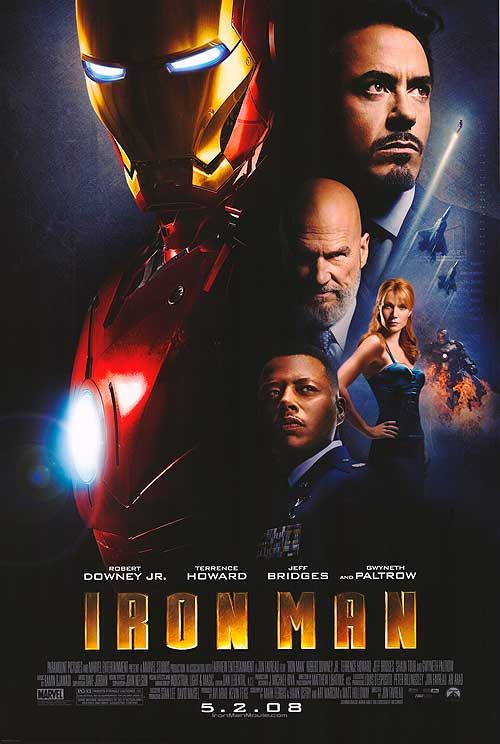
It’s time!
I’ve been very excited to get this project off the ground and here we finally are. Welcome to Journey to Doomsday, a series where I’ll re-watch the MCU leading up to their magnum opus of colossal blockbustery Avengers: Doomsday, breaking down my thoughts, adding some fun character choices along the way, and ranking in real time how I feel about the MCU.
I’ve talked and ranked about this topic at length in previous years, and if those articles are related to what I rewatch then I’ll link them too.
 Cody Enos
Link to my MCU Related Articles
For the most part I will be dealing with spoilers, so if this is your first time going through this cinematic universe maybe put this down, enjoy it yourself, and then come back to read my thoughts. Or, if you have seen these films before let this be your reminder down memory lane.
Anywho…
… let’s begin where it all started: Iron Man.
Cast of Players:
- Tony Stark/Iron Man – CEO of Stark Industries, a weapons company.
- Pepper Potts – Assistant to Tony Stark.
- Obidiah Stane – Tony’s right-hand man in Stark Industries and friend.
- James “Rhodey” Rhodes – Tony’s friend that works for the United States Air force.
- Yinsen – Scientist that saves Tony Stark’s life and fellow captive of The Ten Rings.
- Happy – Tony’s bodyguard and chauffeur.
- Phil Coulson - Agent of S.H.E.I.D. looking to recruit Tony Stark.
- The Ten Rings – A criminal organization that wants Tony’s weapons.
- Strategic Homeland Intervention, Enforcement, and Logistics Division - AKA S.H.E.I.L.D. is a government entity specializing in extra-human activities.
- Damage Control - A sub-section of S.H.E.I.L.D.
It’s 2008. A young teen of 14 is excited to see Iron Man on the big screen. While his diet in pop culture had been mostly DC growing up, he did get a taste of Marvel from their 90s animated shows. He had not read any Iron Man comics yet, but was familiar with the character from the animated movies Ultimate Avengers, Ultimate Avengers 2, and The Invincible Iron Man. He was not going into this superhero movie blind, but that did not mean he wasn’t blindsided by the movie washing over him like a cinematic tidal wave. The cherry on top was when he and his mom were walking into the auditorium where an usher had finished cleaning and stopped them to say, “You might want to stay until after the credits. Trust me.”
I was never the same.
Back when Stan Lee was creating the Marvel Universe in comics with artists like Jack Kirby, Steve Ditko, and John Romita Sr. in the 1960s, his philosophy was wanting these stories to feel like the world outside your window. Hence why many of these characters are stationed in New York and had problems everyday kids knew all too well. In that respect, Iron Man takes that philosophy and runs with it.
Iron Man starts off with Tony Stark showing off weapons to the American military in Afghanistan before being ambushed and taken hostage by the terrorist organization called The Ten Rings. By 2008, Hollywood was still being influenced by 9/11 (especially in their action blockbusters) with Afghanistan being a hot topic on the minds of everyday Americans, making the setup to this comic book movie feel very relatable to non-comic book fans. (For the average joe walking the streets they didn’t see a colorful character in spandex wielding awesome power, but a more nuanced character where they could understand them in relation to the times.)
After being blown up by his own weapon, Tony awakens in a cave to discover a metal hole in his chest and a fellow prisoner who had saved his life. Yinsen had made an electromagnet to keep the shrapnel that Tony was hit with from entering his bloodstream and piercing his heart.
Their captors want Tony to build them the weapon he had demonstrated to the American military, The Jericho, but instead Tony builds a suit of armor to escape after taking out most of the organization holding him and his new friend Yinsen. Unfortunately, Yinsen had given his life for Tony in their uproar.
Back home, Tony calls for a conference and announces to the press that he would stop producing weapons effective immediately. His business partner and friend, Obidiah Stane, tries to deal with the fallout between the press and the board of directors to Stark Industries.
In the meantime, Tony tinkers with the Iron Man suit idea he had made in the desert and improves it with the technology he had back home. After many tests, he was able to create a suit that flies and has weapons of its own. When he sees a news report that The Ten Rings are back and attacking a village, he flies into a rage and shows off what he can really do by subduing the bad guys with ease and flying off into the sunrise.
While Tony is superheroing, Pepper, his assistant, and Agent Coulsen have a subplot exposing Obidiah Stane’s treachery of hiring The Ten Rings to kidnap and kill Tony Stark so that he could take over his company which leads to all characters coming together at a Stark Industries lab to duke it out now that Stane has his own Iron Man suit.
Naturally, Tony wins the day and ends the film with the iconic line to the press: “I am Iron Man.”
Director Jon Favreau ignites this universe with a character full of flaws who wants to learn from his past mistakes. Part of Iron Man’s spectacle is seeing how long it takes Tony to make this suit and learn from it. He fails over and over, but every time he gets back up again to do better. Not only are we getting to see this character have many interactions with himself but also his relationship with tech and how he treats everyone else.
Iron Man isn’t flashy. Even in the final fight between two Iron suits the most memorable parts of the movie come from earlier when he’s tinkering, or flirting with Pepper, or experiencing the upgrades to his suit. The test flight is such a more powerful scene than him beating Stane. This film is character first. It’s not about saving the world. It’s about saving oneself, and that makes this cinematic universe’s first impressions grounded and emotionally inspired to give the next one a shot.
MCU Worldbuilding:
Agent Coulson is a recurring character trying to promote the Strategic Homeland Intervention, Enforcement, and Logistics Division aka S.H.E.I.L.D. a government agency in contact with superheroes in Marvel comics run by Nick Fury. He also name drops a sub-section of S.H.E.I.L.D. titled Damage Control that is cleaning up after Iron Man.
A logo for Roxxon appears in the background of the third act highway fight scene. Roxxon is another company in Marvel comics similar to Stark Industries and have been an antagonist toward Captain America, Iron Man/Stark Industries, and eventually Thor. It’s interesting to see this in the MCU’s first movie as it could imply a rival company being mentioned in multiple films building up to its villainous intents, but if that was the plan, or even an idea, it has not come to pass.
While Roxxon was a fun easter egg, The Ten Rings do have a presence and are the MCUs first bad guy organization. Anyone familiar with comics will know that Iron Man’s big bad The Mandarin wears 10 magical rings. So, to ground this adaptation and have the Ten Rings be The Mandarin’s organization for crime is a fun adaptation while setting up a future character we might see in a later movie.
Finally, after the credits roll, a scene between Nick Fury, head of S.H.E.I.L.D., confronting Tony Stark alludes to him building a team called The Avengers. With these couple sentences this first entry to a cinematic universe made its thesis statement: we are building to a team-up movie involving The Avengers.
Villain Stats:
I wanted to do something fun while going through this rewatch. Here I want to keep track of how many villains the MCU has while seeing A) if they died B) if they used their name. In Iron Man, Obadiah Stane refers to himself and Tony as Ironmongers. His comic book villain name is Iron Monger, however, he never calls himself that as the villain. It’s just a cute nod to referencing the comic character without fully using it and therefore does not count. Why am I doing this? Because Marvel gets praised so much for the movies but are also embarrassed to go full comic book, and I wanted to see that reflected in stats.
Villain Count: 1
Villain Deaths: 1
Does the Villain use their comic book name?
Yes: 0
No: 1
Next Up – >The Incredible Hulk
Ranking the MCU:
1. Iron Man