Where has all the Awe gone?
And exploration in theatre experiences


At the end of May I was invited to see Little Shop of Horrors after work with some friends. Thankfully, Regal Cinemas had been doing themed re-releases every month which meant I got to experience the 1986 film directed by Frank Oz, Little Shop of Horrors, for the first time in a theatre. It had always been on my watchlist, but having this experience with friends that are excited, know every lyric to this musical, with one of them declaring it their favorite movie, was an unforgettable experience.
But as I was watching the movie I was blown away by the practical effects. Yes, it should be expected that one of the most famous puppeteers made really good puppets, however, knowing it would be good and seeing it in action are two completely different experiences. I sat in my seat awe-struck by Audrey II’s dynamism, and I think seeing it on the big screen as my introduction amplified my appreciation even more.
The experience brought me back to my childhood of seeing Pirates of the Caribbean on the big screen and how the franchise had me glued to my seat as I witnessed a squid-faced villain interact with Jack Sparrow or a wedding being enacted in the middle of a fight scene that’s taking place during a maelstrom. It brought back the wonder of seeing dinosaurs resurrected from Jurassic Park and the horror of a Guillermo Del Toro fairy tale like Pan’s Labyrinth.
However, Little Shop of Horrors wasn’t an epic blockbuster. It was considered an underperformance back when it was released in 1986 and formed a cult following once it hit physical media, and yet I got the same experience as the blockbusters of my youth when sitting in that theatre with my friends bopping my head to Steve Martin singing ‘Dentist!’
And so, I asked, why?
Why was I feeling such awe coming from a musical that adapted a play?
One night I took a Lyft home from work. My driver was the chatty type and since he picked me up from the movie theaters he wanted to talk about movies. What struck me about his opinion was how much he didn’t like CGI. This guy was by no means a cinephile, but he talked about how he missed going to the movies and how everything was digital now. There wasn’t anything tactile for him to latch onto. He talked about sets and how carpenters would have made some really cool stuff or shooting on location felt real compared to green screen sets that dominate the blockbusters, and then it hit me. The reason I was in awe of Little Shop of Horrors was the same reason this guy was lamenting his movie going experience. Not only were it practical effects to make Audrey II but they were impressive. The lips forming syllables at that talking speed, or the vines whipping with irregularity, or the growth of the beast and how it felt like it was living and breathing all attributed to my being awe-struck.
And so, I asked again, how was I in awe?
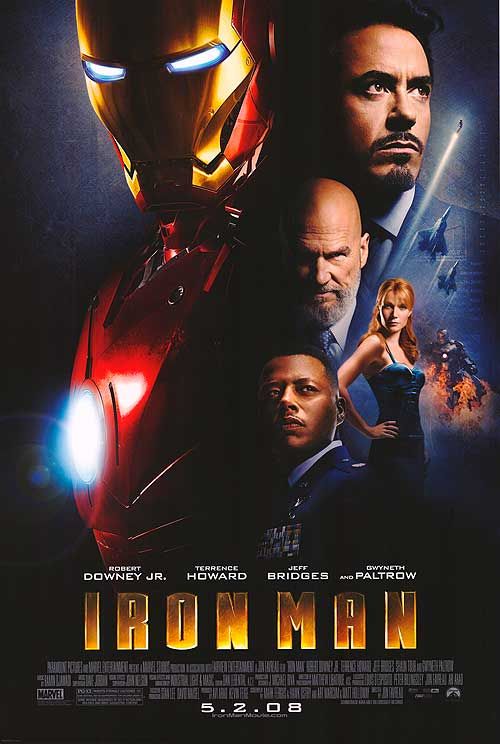
The field of film has shifted drastically since the cinematic universe boom back in the 2010s with Marvel and DC building their brands. Along the way I believe spectacle had fallen to the wayside when these experiences became character focused. Now don’t get me wrong, Iron Man’s character development is great in an ongoing story, however, when he’s in his individual films, he doesn’t carry that awe that I felt in the first one that started it all.
The Iron Man suit was gnarly as it evolved with the character wielding it back in the first Iron Man. Obviously the movie had to use CGI to achieve certain shots and action sequences, but there was a good balance between that and practical that made the character come to life on the big screen. Like how I experienced Audrey II, the Iron Man armor felt practical at times that made my imagination ignite. That was awe.
As the films continued, and CG had evolved, almost everything seemed to default to that state with very little practical aspects in the foreground. Heck, Avengers: Endgame even used CG suits for all the characters at one point because production had yet to make them with multiple news articles talking about this achievement. I could see why my Lyft driver would be concerned with this aspect of movies even if he wasn’t a cinephile. Digital had taken over so much of the screen and conversation surrounding film.
There are modern films that have gotten back to practical effects, but more often than not the practical isn’t balanced with the CG in a way for it to stand out. In the films I’ve listed that have generated awe on the big screen there is a balance between these different effects, and both can be awe inspiring, but when there isn’t a balance, the intention can be lost and easily digitally scrubbed over.
So, as I sat there in my Lyft talking to this stranger about movies and expectations, and ruminating on what came before, I thought of a movie that had come out in March of this year and still was in conversation to recommend him; Project Hail Mary. That was the only film I could think of that had everything my driver wanted.
Based on Andy Weir’s best-selling science fiction novel, Project Hail Mary had become an unrelenting underdog in this year’s box office. It continued to be a box office draw through the beginning of summer and had been a consistent statement in weekly box office rankings.
A film lasting nearly three months at a theatre is rare these days with the amount of movies being churned out. Project Hail Mary persevered, though, and for good reason. It’s a great optimistic story that utilizes space, but it also felt like a callback to what blockbusters used to be when it came to sets and effects.
The entire spaceship/tunnel set was a feast for the eyes with detail put into every place reminiscent of 2001: A Space Odyssey. Then, like Audrey II in Little Shop of Horrors, Grace’s companion is a puppet which allows an actor to have better chemistry in their performance while also having something to play off, and something tangible for the audience to get emotionally attached.
But it was a scene later in the movie that really struck a chord with me. Grace (played by Ryan Gosling) is outside the ship collecting samples from a planet’s atmosphere. The scene switches to infrared and you can see all the particles dancing around him. Truly an awe-inspiring scene. And while that became one of my favorite scenes in the movie there was a little voice in my head that said, “It’s probably CGI.”
That doubt did make me sad because I was appreciating so much of the practical sets and effects they were making in camera for this movie that having one of my favorite scenes be CG focused felt disappointing. But that was not the case. It turns out, according to an interview with Greig Fraser, cinematographer for Project Hail Mary, in American Cinematographer magazine (April 2026 Vol. 107 No. 4), the scene I loved so much was practical and that blew my mind even more. Yes, having a space movie does involve using CGI and there’s nothing wrong with that, but this film had such a good balance with a focus and emphasis on the practical, which I believe is partly why so many people fell in love with it and wanted to see it on the big screen again and again. It was an experience.
No matter how small a movie is it’s impressive to see practical sets and effects on screen. It’s a way to showcase people’s art and experiences. You’re not just setting a scene you’re seeing somebody showcasing their specific job whether it be puppeteer, carpenter, costumer, all these below the screen jobs that the average joe may never know about are what bring awe to the big screen. Their craft and masterful work in tandem with a good story brings in audiences, creates conversations, and leaves us all with memorable experiences to look back on and point, “wasn’t that inspiring?”
 Cody Enos
For More Essays