Why I Believe The Netflix/Mowgli Deal is Bad (Part 2)


From the starting line Warner Bros. adaptation of Rudyard Kipling's The Jungle Book has been, and still is, under fire of many criticisms from audiences and fans of the Disney live action movie, many of which I cover in Part 1 . Even under those circumstances I felt that WB could have done well at the box office, but recently it had been revealed that Netflix now holds the rights to WBs Mowgli and will release it next year. This does not bode well for many reasons, and I fear it may be the final nail in the yet unmade coffin for this movie.
 Cody Enos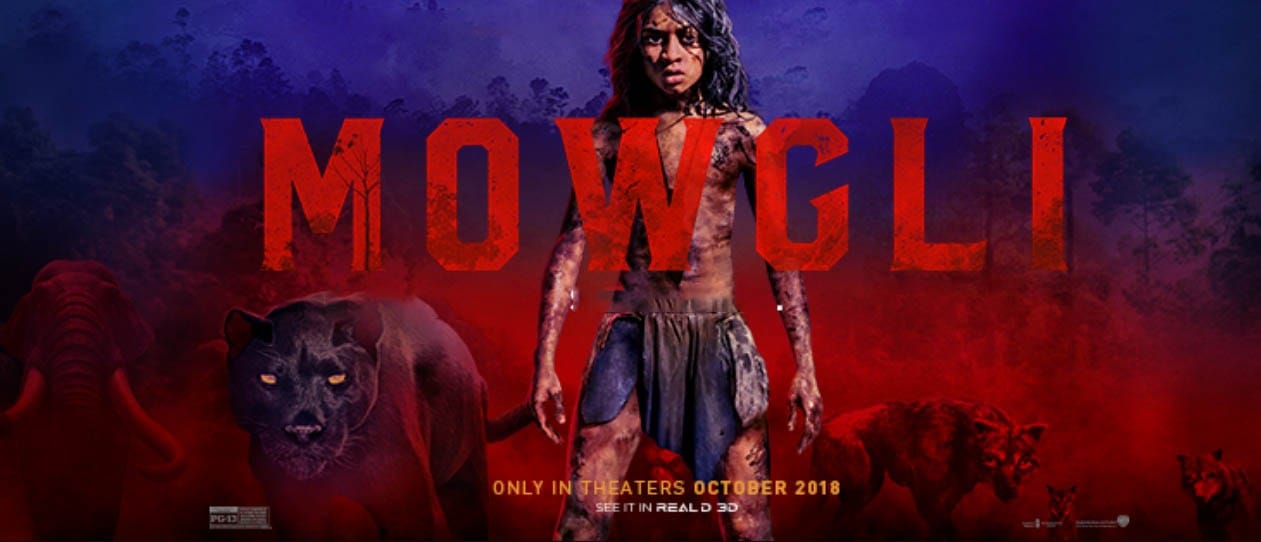
Catch Up on the First Half
Netflix has rarely put their movies on the big screen for a theatrical run. The whole point of Netflix is to watch movies in the comfort of your own home. The few times that their films did have a theatrical release was when it wanted to run in the Oscar race. Most notably would be their first big hit Beasts of No Nation. Netflix acquired the film and put it in theaters for two weeks, which I think is the longest any of their films have been in theaters, in select cities so it could be eligible for the Oscars. The first Netflix film to get an Oscar nomination would be Ava DuVernay's documentary 13th, and then Bryan Fogel's Icarus winning the Oscar for best documentary a year later. Netflix is indeed rising in award winning films, but still their few theatrical releases have been poor and short. A few weeks at most.

At the time of this writing there isn't much known as to what Netflix will do with their rights, but it does look like they'll have some sort of theatrical release for Mowgli because of the 3D. Andy Serkis made Mowgli with 3D in mind, and I am glad that Netflix will give this film a chance at a 3D life on the big screen. If they didn't, I would have been immensely disappointed, and saddened, at all the hard work people had to do in order to make a 3D film, and have at the last second no one be able to see it in that format. So that's a little light of good news. However, the question then turns to how long can people be able to see this film in 3D?
Netflix doesn't do extended weeks in theaters. Mowgli at best will be lucky getting two weeks, although I am hoping they will put it out for more. Once it is out of theaters what happens to the 3D format? Netflix doesn't have the capacity to stream their movies in 3D, they have not released any of their movies on home media that I am aware of, or does WB still have the rights to release it on home media since they've been championing 3D releases in the United States? A lot of questions surround this small part of the film, and many more will rise.

Another big issue I have with this is how Netflix will promote the film. From what I've noticed, Netflix will promote a film they believe will be popular for X amount of time, and then forget about it and move on. This can be for a weekend, maybe a month, maybe more if we're lucky. Films like The Meyerowitz Stories, Audrie & Daisy, 13th, Beasts of No Nation were promoted and had good critical ratings when they came out. When you logged into Netflix they were displayed on the front page, but what about now? After the initial influx of interested customers Netflix moves onto the next big thing and drops their films into an increasing hole of vast content. Netflix has also stated many times that they want to try and get to a point where it's all their original content. We've had a surge of TV shows, movies, and anime, all of which were Netflix originals in this year alone which raises the question; Does Netflix care about quality, or just quantity. For every 13th there's The Cloverfield Paradox, and for every Audrie & Daisy there's a Spectral. Netflix's quality has ranged vastly over the last year or so, leaving even die hard Netflix supporters scratching their heads over the company's choices. Which brings me to the two big points on why Netflix will be death to Mowgli.
The first point is Netflix as a company is more famous for their TV shows than movies. They may have nominations and awards for a few of their movies, notably documentaries, but Netflix and streaming services are best known for their television shows. Stranger Things, Lost in Space, Black Mirror, and the Marvel Netflix shows are what people love and go over time and again. Whenever a season drops it feels like an event, and everyone tries to watch them before the weekend is over. I have not seen this when it comes to Netflix movies. They'll promote something like Crouching Tiger Hidden Dragon Sword of Destiny for a week or two, and then promote something else. Their movies haven't been a hit, and of recent they've been questioned with quality.

The second point that not only will hurt Mowgli, but now hurts every Netflix film, is how they promote their products. Like I've already talked about, Netflix likes to cultivate their audiences to think of new releases as events. This is why their television series have been hits, because they're bingeable all weekend. Movies on the other hand are tricky. You don't binge movies unless they're a franchise, and you are not as attached to the characters as you would be in an eight to twelve hour show. But, when they promote movies they go all out on their opening day/weekend. The Cloverfield Paradox had a great marketing campaign. Similar to 10 Cloverfield Lane, this installment was announced near its release date except it was at the Super Bowl, and dropped that night too. I believe this is the first time that has happened, and Netflix marketed it as a massive event by tying it into a massive event. A similar situation happened with Bright, but it was marketed as Netflix's first $90 million film, and was again treated as an event. Not every Netflix movie is marketed as such, like The Kissing Booth or The Polka King, and once the event of "opening weekend" passes for these Netflix movies they are largely forgotten.
This is where Netflix gets chaotic. Once a movie, or television show, gets less popular the more it falls down the suggestion ladder. If that wasn't enough it then gets pushed down even farther depending on your tastes. Netflix has such a massive catalog that you will not see half of the available content, and Netflix will then suggest things based on your preferences and past watches. This means a lot of shows and movies are suggested to you repeatedly, and those hidden gems and special movies won't be happened upon unless you actively search for them. A critically acclaimed documentary called Cartel Land has been on Netflix for a few years, and curious as to how to find it I start searching documentaries and scrolling down...even though it's highly reviewed it still took me a while until I could find it on my own. Then I tried another, Black Fish. If I use Netflix's website I can find it under Documentaries and "Critically Acclaimed Emotional Movies," but if I use the app on my PS3 or TV it takes forever to find it in the sea of unorganized content, and that's what happens to anything that isn't promoted by Netflix. If it doesn't match your preferences, and past experiences, it's all globed together in an unorganized cluster. Once Mowgli is out for a month, and everyone has had a chance to see it on Netflix it'll just drift down to the bottom of this cluster of content and be forgotten.

Finally, WB has publicly sent Mowgli to the chopping block by announcing Netflix's acquisition. By telling the whole world that they'd rather sell it off to a streaming service than put it into theaters is like they are telling their audience that it isn't worth seeing. Sure the opening weekend in theaters may not have been as good as Disney's adaptation, but it feels as if this situation is even worse, turning the few people you did have interested off, and now even less people will seek it out.
Mowgli is in an unfortunate state where audiences were tentatively against this adaptation, and now it'll most likely be forgotten by this time next year and mixed with all the other Netflix movies that rarely get touched. When I heard about this news I thought about not owning this movie on blu-ray, not being able to experience the special features and the breakdowns of the ground breaking motion capture techniques they used. I was sad that I wouldn't have been able to see it on the big screen, and may never see it in 3D except for its inevitably brief theatrical screening. What could have been a great film, or an average film, or a bad film, is now stamped with the expectation that it'll be bad, or not worth seeing, and will eventually be lost in the sea of titles. My biggest fear is that this news will be a death sentence to a film that didn't deserve this much controversy.
 Cody
Cody